Are Vacuum Lifters Really Safer Than Manual Handling?
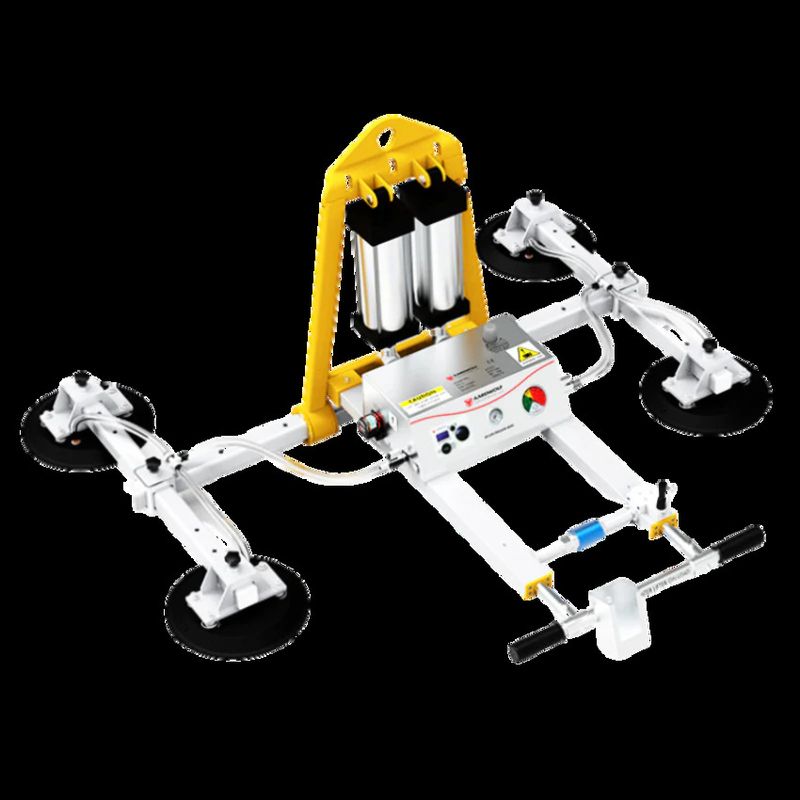
If you’ve been in fabrication long enough, you know the truth: moving heavy material is where most of the risk lies. It’s not the cutting, polishing, or edging that usually causes the biggest injuries. It’s everything that happens in between. Those clumsy lifts, the tight turns, the slippery surfaces, the rushed movements when you’re trying to keep up with a busy install schedule.
Manual lifting is part of the job, but when you’re regularly handling 300-, 600-, even 1,200-pound pieces of stone, “just lift carefully” isn’t a safety plan.
And that’s exactly why so many shops are shifting to vacuum lifters. Not because it’s trendy. Not because it’s the new shiny tool. But because it solves real problems fabricators deal with every day, such as strain injuries, staffing challenges, broken material, and slow workflows.
The big question is: Are vacuum lifters really safer than manual handling? Short answer, yes. Long answer, let’s break down why.
The Hidden Cost of Manual Slab Handling
Most shops underestimate how much manual handling is holding them back (and how dangerous it really is). Think about the average day:
- Lifting large-format porcelain or quartz by hand
- Wrestling a piece off the A-frame
- Shifting a 700-lb granite slab an inch at a time
- Holding a countertop in position during installation
- Trying to avoid chips, cracks, and finger pinches
Each one of those moves is an injury waiting to happen, or a damaged piece headed straight to the scrap pile.
Manual handling brings where is the third risk:
1. Crew Injuries
Back strains, shoulder tears, repetitive stress injuries are more common. And one injury can sideline a key installer for weeks.
2. Slow Production
When two or three guys have to stop what they’re doing just to shift a slab, your whole workflow slows down.
This is exactly why vacuum lifters exist: to take the weight off your crew, literally.
Why Vacuum Lifters Change the Safety Game
Tait Sales & Consulting stocks vacuum lifters built specifically for fabrication environments, stone shops, glass shops, installers, and anyone working with heavy, delicate, or oversized materials.
What makes them safer than manual lifting? The advantages stack up quickly.
1. One Operator Can Do the Work of Two (Safely)
With a vacuum lifter, one skilled operator can move slabs that once required a full team.
That means:
- Fewer hands near pinch zones
- Less risk of dropping a slab mid-lift
- A more controlled, stable movement from storage to saw to CNC
It does not matter if the slab is 200 pounds or 1,200 pounds, the vacuum lifter takes the weight, not your crew.
2. No Uneasy Hand Positions or “Just Get Under It” Lifts
Manual lifts fail when the slab is slick, the angle is bad, or the footing isn’t perfect. A vacuum lifter holds the slab with even pressure distributed across the suction pad(s). Every lift is stable, level, and controlled.
That’s safety and consistency. And that’s how you prevent the small mistakes that turn into big incidents.
3. Reduced Breakage and Surface Damage
When the vacuum lifter applies suction, it spreads force across the surface instead of creating pressure points. That matters for materials like:
- Quartz
- Glass
- Ultra-compact sintered stone
- Marble
With manual lifting, slabs twist and flex as you move. With vacuum lifting, you avoid that bending stress completely.
4. Improved Jobsite Safety Too
Vacuum lifters aren’t just for the shop. Glass installers, commercial façade teams, and countertop installers use them every day on-site.
When the alternative is “three people trying to wrestle a 10-foot panel up a staircase,” you can see why vacuum lifting is becoming a standard practice.
Types of Vacuum Lifters: Choosing What Fits Your Workflow
Tait Sales & Consulting offers a wide range of vacuum lifting solutions to match the needs of different shops and project demands. Every fabrication environment is unique, and having the right lifting equipment helps teams work more safely, move faster, and protect valuable materials.
Pneumatic Vacuum Lifters
These are the workhorses.
Perfect for stone shops and production lines.
Features include:
- Multiple pad sizes
- Interchangeable pads
- Pivoting options for vertical-to-horizontal lifting
- Strong, consistent suction powered by compressed air
If your shop handles slabs all day, pneumatic systems keep your process fast and smooth.
Glass Vacuum Lifters
Built for oversized glass, curtain wall panels, windows, and fragile architectural pieces.
You’ll find options like:
- Rotating frames
- Tilting mechanisms
- Multiple suction cups
- High-capacity weight limits
For glass installers, these are not optional. They’re essential.
So… Are They Really Safer? Absolutely.
Vacuum lifters don’t just make lifting easier.
They make it predictable.
When you take weight off your team, you:
- Reduce injuries
- Reduce breakage
- Reduce fatigue
- Increase productivity
- And protect your margins
If your shop is still moving slabs manually, it might be time to give your crew and your workflow a needed upgrade.
Tait Sales & Consulting, LLC can help you choose the right vacuum lifter for your materials, lifting equipment, and daily demands.